
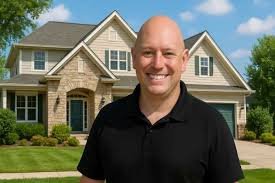
Richmond’s first responders run toward danger when everyone else runs away. Police officers patrolling the city at 2 a.m., firefighters pulling people from burning homes in Henrico County, paramedics and EMTs racing through Chesterfield traffic to reach someone in crisis — these are the people who hold the city together. Yet when it comes to buying a home in the same communities they protect, many first responders are navigating the mortgage process with the same information as everyone else, unaware that specialized programs, flexible qualification paths, and broker-level lender access can meaningfully change their outcome.
The good news: the mortgage landscape for first responders is broader than most people realize. Programs like HUD’s Good Neighbor Next Door, the Homes for Heroes network, FHA loans with credit scores down to 500, and VA loans for those who also served all represent real options. The better news: none of these require you to be a perfect borrower. Shift differentials, overtime income, part-time second jobs, and even a past bank turndown don’t automatically close the door.
This article covers the full picture without hype. You’ll learn which loan programs actually apply to first responders in Richmond, how credit scores as low as 500 fit into the equation, why shopping hundreds of lenders through a single NoTouch Credit prequalification changes the rate math, and how the process works from initial inquiry to closing day. Whether you’re a Richmond City police officer, a Henrico County firefighter, or a Chesterfield paramedic exploring homeownership for the first time, this is the straightforward breakdown you deserve.
Defining First Responder Eligibility Across Programs
The term “first responder” means different things depending on which program or lender you’re talking to. For most specialized mortgage programs, the core eligible professions include law enforcement officers (city police, sheriff’s deputies, and corrections officers), career and volunteer firefighters, emergency medical technicians, paramedics, and in some cases 911 dispatchers. That said, program definitions vary, and it’s worth confirming eligibility for each specific program before building your strategy around it.
Employment status adds another layer. A full-time W-2 employee of Richmond City Fire or the Richmond Police Department documents income differently than a part-time EMT working for a private ambulance company or a volunteer firefighter with a separate primary employer. Retired first responders face their own documentation requirements, typically relying on pension income verification and separation paperwork. Each of these situations is workable, but each requires a lender who understands how to present the file correctly to underwriting.
One distinction worth understanding early: there’s a meaningful difference between profession-specific discount programs and standard loan programs that first responders access through normal qualification channels. Profession-specific programs like HUD’s Good Neighbor Next Door offer a genuine price advantage on eligible properties. But their inventory in Richmond is limited and unpredictable. Standard loan programs — FHA, VA, conventional, USDA — are available on any eligible property and often deliver more practical savings, especially when a broker is shopping wholesale rates across hundreds of lenders simultaneously.
In Richmond’s market, first responders employed by city and county jurisdictions — Richmond City, Henrico County, Chesterfield County, Hanover County — represent a significant borrower segment. Many of them have income complexity that traditional bank underwriters handle poorly: overtime that’s been consistent for years but gets excluded from the calculation, shift differentials that make monthly income look irregular on paper, or union membership that affects how employment is verified. FHA guidelines and many wholesale lenders allow overtime income with a two-year documented history. Banks often don’t. That difference alone can determine whether a loan gets approved or denied.
The bottom line on eligibility: if you work in public safety in any capacity in the Richmond area, start the conversation. The worst outcome is learning exactly what you qualify for right now and what a 60 to 90 day improvement path looks like if your profile needs strengthening.
Loan Programs First Responders Actually Use in Richmond
Understanding which loan programs are available — and how they compare — is the foundation of any smart mortgage strategy. Here’s a structured breakdown of the four primary loan types Richmond first responders use, followed by two profession-specific programs worth understanding.
Loan Program Comparison Table
FHA Loan: Minimum credit score 500 (with 10% down) or 580 (with 3.5% down). Mortgage insurance required. Strong option for first responders with credit challenges or limited down payment savings. Overtime and shift differential income accepted with 2-year history. Source: HUD.gov
VA Loan: No minimum credit score set by VA (lender overlays typically start at 580–620). No down payment required for eligible amounts. No private mortgage insurance. Funding fee applies, with exemptions for service-connected disability. Available only to first responders who also have qualifying military service. Source: VA.gov
USDA Loan: Minimum credit score typically 640 at most lenders. No down payment required in eligible areas. Income limits apply. Some zip codes in Hanover County, outer Chesterfield County, and Goochland may qualify. Verify specific addresses at the USDA eligibility map before assuming qualification.
Conventional Loan: Minimum credit score typically 620–640. Down payment from 3% depending on program. No upfront mortgage insurance premium; PMI can be removed once equity reaches 20%. Best rates available to borrowers with 740+ scores and strong reserves.
HUD Good Neighbor Next Door
HUD’s Good Neighbor Next Door program offers law enforcement officers, firefighters, and EMTs/paramedics a 50% discount on the list price of eligible HUD-owned homes in designated revitalization areas. The commitment: you must live in the property as your sole residence for 36 months. That’s a genuine, substantial benefit when inventory aligns with your needs.
The honest caveat for Richmond buyers: available inventory in any given market is limited and changes frequently. You may find zero eligible properties in Richmond’s revitalization areas this month and three next month. Building your entire home search around this program is a fragile strategy. Use it as an opportunity to check regularly, but pursue parallel qualification paths so you’re ready to act on any eligible property. Verify current listings at HUD.gov’s Good Neighbor Next Door page.
Homes for Heroes
The Homes for Heroes network connects first responders, military members, healthcare workers, and teachers with participating real estate agents and lenders who offer fee reductions at closing. Savings come from real estate agent commission credits and lender fee reductions — not from below-market interest rates. Participation varies by lender and agent, so ask specifically whether any lender you’re evaluating participates. Learn more at homesforheroes.com.
The Rate Reality: Why Shopping Hundreds of Lenders Changes Everything
Here’s a math problem most first responders never get to solve: what is the actual dollar difference between the rate your bank offers and the best available rate in the wholesale market? The answer, over a 30-year loan, is often significant enough to matter.
The table below uses a $300,000 purchase price with 20% down ($60,000), resulting in a $240,000 loan amount on a 30-year fixed term. These figures are illustrative examples only. Actual rates depend on credit score, loan type, property type, and daily market conditions.
Rate and Payment Comparison: $240,000 Loan, 30-Year Fixed
Rate 6.75%: Monthly principal and interest payment of $1,557. Total interest paid over 30 years: $320,520.
Rate 7.00%: Monthly principal and interest payment of $1,597. Total interest paid over 30 years: $334,920.
Rate 7.25%: Monthly principal and interest payment of $1,637. Total interest paid over 30 years: $349,320.
The difference between 6.75% and 7.25% is $80 per month and $28,800 over the life of the loan. That’s real money — money that stays in your household budget or builds equity faster through additional principal payments.
The Breakeven Calculation
When evaluating whether paying a point to buy down your rate makes financial sense, the breakeven math works like this: if buying 0.5% off your rate costs one discount point ($2,400 on a $240,000 loan) and saves you $80 per month, you divide the cost by the monthly savings. $2,400 ÷ $80 = 30 months. If you stay in the home longer than 30 months, the buydown pays for itself. If you expect to move or refinance sooner, it may not. This is the kind of specific, personalized calculation that a broker who knows your situation can walk through with you.
Why Single-Lender Institutions Limit Your Options
Banks and credit unions offer their own products. That’s not a criticism — it’s a structural reality. When you walk into your local bank or credit union, the loan officer can only show you what that institution offers. They may have one conventional product, one FHA option, and one rate sheet. If their pricing isn’t competitive that week, you have no way of knowing.
A mortgage broker accesses wholesale pricing from hundreds of lenders simultaneously through a single inquiry. That means the rate comparison happens behind the scenes, across multiple lenders competing for your loan, before you ever see a number. For first responders who work rotating shifts and genuinely cannot spend a week calling eight different lenders during business hours, this matters practically, not just financially.
The NoTouch Credit prequalification (using Vantage Score 4.0) means that initial comparison process doesn’t generate a hard inquiry on your credit report. You can see real options across hundreds of lenders before committing to a single application. That’s a structural advantage that no single direct lender — national or local — can replicate.
Credit Scores, Bank Turndowns, and the Path Forward
Credit score anxiety stops more first responders from starting the mortgage conversation than any actual disqualification. Here’s the factual landscape: FHA loans accept credit scores down to 500 with a 10% down payment, and down to 580 with 3.5% down. Many wholesale lenders work with conventional loan applicants at 580. These are real thresholds, not marketing claims. They come directly from HUD guidelines and lender overlays in the wholesale market.
The NoTouch Credit prequalification uses Vantage Score 4.0, which is a soft pull. It does not create a hard inquiry on your credit report and does not affect your score. This is the tool that lets you see what you actually qualify for right now without any credit consequence. Important to understand: final mortgage approval uses a tri-merge hard pull FICO score. The soft pull prequalification shows your real options; the hard pull happens later, when you’ve chosen a lender and are moving forward with a specific loan. These are two distinct steps, and the first one costs you nothing in credit impact.
When Your Bank or Credit Union Says No
Banks and credit unions turn down first responders for several common reasons that have nothing to do with whether the borrower is actually creditworthy in the broader lending market.
Credit score below bank overlay: A bank may require a 660 minimum for conventional loans even though FHA accepts 580 and some wholesale lenders work to 620 on conventional. The bank’s internal policy is stricter than the program guidelines require.
Debt-to-income ratio calculated without overtime: Many banks exclude overtime income unless it meets their internal consistency requirements. FHA guidelines and many wholesale lenders allow overtime income with a documented two-year history, which is common for Richmond first responders who regularly work additional shifts.
Employment type complexity: A firefighter with a part-time second job, a paramedic working for both a county agency and a private company, or a first responder recently promoted to a higher pay grade may have income documentation that bank underwriters aren’t equipped to handle confidently. Wholesale lenders who regularly work with public safety borrowers understand how to document and present these files.
If you’ve been turned down, the question isn’t whether you can get a mortgage — it’s which lender and which program fits your actual profile. A bank turndown is one data point, not a final answer.
Credit Restoration as a Bridge
For first responders who need 60 to 90 days to improve their scores before applying, specific thresholds unlock meaningfully better outcomes. Moving from below 580 to above 580 opens the 3.5% down FHA path. Crossing 620 opens conventional loan access at many wholesale lenders. Reaching 680 and above begins to unlock better conventional pricing tiers. A broker who knows these thresholds can give you a precise target and a realistic timeline, rather than a vague “improve your credit and come back later.”
How Richmond Mortgages Compares to Other Local and National Lenders
Making an honest comparison requires understanding what each type of lender is and what they structurally can and cannot offer. The table below covers the key dimensions first responders should evaluate.
Lender Comparison Table
Richmond Mortgages (Duane Buziak, NMLS#1110647): Mortgage broker. Accesses hundreds of wholesale lenders. NoTouch Credit prequalification available. Credit score floor to 500 (FHA). Homes for Heroes participation available. 24/7 availability. Licensed in VA, FL, TN, GA.
Rocket Mortgage: National direct lender. Accesses own products only. Strong digital technology platform. Credit score floors vary by product. No wholesale lender access. Excellent for borrowers who prioritize a fully digital experience with a single lender’s product shelf.
Movement Mortgage: Direct lender. Known for speed marketing and community-focused lending. Limited to their own product shelf. Local Richmond loan officers available, including Jay Bowry. Does not access wholesale pricing.
C&F Mortgage Corporation: Strong local Richmond presence with deep community roots. Direct lender. Relationship-focused service model. Limited to their own products. Local knowledge is a genuine strength.
CapCenter: Richmond-based direct lender known for a no-commission fee structure. Their model reduces certain closing costs, which is a real and honest advantage for some borrowers. Direct lender only — no wholesale lender access. Worth comparing their fee structure against wholesale pricing on a loan-by-loan basis.
Alcova Mortgage: Regional lender with Virginia presence. Direct lender. Community-oriented. Limited to their own product shelf.
Direct Q&A: Honest Answers to Common First Responder Questions
Q: Can I get a better rate at my bank? Possibly, on any given day. But your bank offers one rate from one institution. A broker compares hundreds of lenders simultaneously. The probability of finding a more competitive rate through broader comparison is structurally higher, though not guaranteed on every transaction.
Q: Is Rocket Mortgage good for first responders? Rocket has strong technology and a straightforward digital process. For first responders with strong credit and standard income documentation, it’s a legitimate option. For borrowers with credit below 620, complex income from shift differentials and overtime, or a recent bank turndown, the wholesale market’s flexibility typically provides more paths forward.
Q: What does CapCenter offer that’s different? CapCenter’s no-commission model can reduce agent-side costs. Their lender fees are structured differently than commission-based models. For a first responder comparing options, it’s worth getting a CapCenter quote and comparing it against wholesale lender pricing on the same loan scenario. The right answer depends on your specific loan amount, credit profile, and property.
One note for Richmond homebuyers doing their own research: Colonial 1st Mortgage appears in some Richmond and Glen Allen mortgage broker directory listings. The Better Business Bureau lists this business as out of business, their domain no longer resolves to a functioning mortgage company website, and their most recent Yelp review was posted in 2017. If you encounter Colonial 1st Mortgage in search results, verify current licensing status at nmlsconsumeraccess.org before making contact.
From NoTouch Prequalification to Closing Day in Richmond
The process for a Richmond first responder starts with the NoTouch Credit prequalification. Using Vantage Score 4.0, this soft pull shows your real options across hundreds of lenders without generating a hard inquiry. You see actual loan programs, estimated rates, and qualification paths before any commitment is made. This is the starting point, not a marketing step.
Document Checklist for First Responders
Income documentation: Two years of W-2s, two most recent pay stubs showing base pay, overtime, and shift differential line items, and a signed employment verification letter from your agency. If you have a second job, include documentation for that income source as well.
Employment verification: Union membership documentation if applicable. Letter of employment from your department or agency. If recently promoted or reclassified, a letter explaining the income change helps underwriters understand the file.
Asset documentation: Two months of bank statements, retirement account statements if using for reserves, and documentation of any gift funds if applicable.
Identity and property: Government-issued ID, Social Security number for the hard pull at application, and the purchase contract once you’re under agreement.
Speed to Close as a Competitive Factor
Richmond’s housing market has been competitive across multiple price tiers. When a seller receives multiple offers, a pre-approved buyer with a documented fast close timeline is a stronger offer than a buyer who is “pre-qualified in principle.” Speed to close matters because it signals to sellers and their agents that the financing is solid and the timeline is reliable.
A streamlined broker process — where the file is prepared correctly from the first submission — typically moves faster than an institutional lender working through internal layers of review. When your file is complete and your lender knows how to present first responder income documentation correctly, the underwriting process runs more smoothly.
24/7 Access for Rotating Shift Workers
This is a practical reality that most mortgage discussions ignore: first responders work nights, weekends, and holidays. The ability to upload documents, review loan scenarios, ask questions, and move your file forward at 11 p.m. on a Tuesday or 6 a.m. on a Sunday is not a luxury for someone on a rotating shift schedule. It’s a basic requirement. The 24/7 availability of the Richmond Mortgages platform means your mortgage process doesn’t have to wait until you’re off shift during banker’s hours.
Your Next Steps as a Richmond First Responder
The key takeaways from this guide are straightforward. First responders in Richmond have real loan options across FHA, VA, USDA, and conventional programs, with credit scores starting at 500 not disqualifying anyone from beginning the conversation. HUD’s Good Neighbor Next Door and the Homes for Heroes network add potential savings layers worth exploring. Shopping hundreds of lenders through a single NoTouch Credit inquiry is the most efficient path to finding a competitive rate, and the math on rate differences — $28,800 over 30 years on a 0.5% gap — makes that comparison worth doing before you commit to any single lender.
If your bank or credit union has already said no, that’s one lender’s answer, not the market’s answer. Overtime income, shift differentials, and complex employment situations are workable with the right lender and the right file presentation.
Get prequalified today with no credit impact and see your real options across hundreds of lenders before making any commitment.
To speak directly with Duane Buziak, contact (804) 212-8663 or visit richmondmortgages.com.