
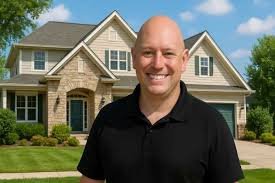
Saving for a down payment is one of the most common barriers standing between Richmond-area renters and homeownership. Many buyers assume they need 20% down before they can even begin the process — but that assumption leaves real money on the table.
Virginia, the City of Richmond, and federal loan programs collectively offer multiple pathways to reduce or eliminate out-of-pocket down payment costs for qualified buyers. This guide breaks down seven specific, actionable strategies available to homebuyers purchasing in Richmond, VA and surrounding areas.
Whether your credit score is 500 or 780, whether you’re a first-time buyer or returning to homeownership after a setback, there is likely a program or combination of programs that applies to your situation. Each strategy below is explained in plain language, with implementation steps and honest comparisons so you can make an informed decision.
One critical advantage covered throughout this guide: exploring these programs does not require a hard credit pull. Richmond Mortgages uses a NoTouch Credit solution powered by Vantage Score 4.0 that lets you shop hundreds of lenders and explore program eligibility without any impact to your credit score. That matters when you’re still in the planning stage. The math is shown in detail throughout so you can calculate your own potential savings before ever speaking to a lender.
1. Virginia Housing Down Payment Assistance Grant
The Challenge It Solves
Coming up with even 3.5% down on a Richmond-area home can feel like a moving target when home prices in Henrico County are running in the $390,000 to $430,000 range. The Virginia Housing DPA Grant directly addresses this barrier by providing funds that do not need to be repaid — ever. This is not a loan. It is a grant, and that distinction changes the math entirely.
The Strategy Explained
Virginia Housing (formerly VHDA) offers a Down Payment Assistance Grant of up to 2.5% of the purchase price for eligible buyers. The grant is used in combination with a Virginia Housing first mortgage product, either FHA or Conventional. Income and purchase price limits apply by county and are updated periodically, so current limits must be verified directly at virginiahousing.com/home-buying/down-payment-assistance.
For Richmond MSA buyers, the program is accessible through approved lenders who are certified to originate Virginia Housing products. Richmond Mortgages works with Virginia Housing-eligible lenders across its wholesale network. Buyers exploring affordable home loans in Richmond will find the DPA Grant is one of the most impactful tools available for reducing upfront costs.
Implementation Steps
1. Verify income eligibility using the current Virginia Housing income limits table for your county at virginiahousing.com. Richmond, Henrico, Chesterfield, and Hanover each have separate limit schedules.
2. Confirm the purchase price of the home you are targeting falls within Virginia Housing’s purchase price limits for your county.
3. Check your credit score. Virginia Housing programs typically require a minimum 620 credit score for most products. Verify current minimums at the time you apply.
4. Pair the grant with a Virginia Housing FHA or Conventional first mortgage through an approved lender to activate the DPA benefit.
The Breakeven Math
Here is a worked example on a $300,000 Richmond-area home purchase using the Virginia Housing DPA Grant:
Purchase Price: $300,000
FHA Minimum Down Payment (3.5%): $10,500
Virginia Housing DPA Grant (2.5%): $7,500 applied toward down payment
Buyer’s Remaining Down Payment Obligation: $10,500 minus $7,500 = $3,000 out of pocket
Estimated Closing Costs (approx. 3%): $9,000 (separate from down payment, covered in Strategy 2)
The grant effectively reduces your required cash contribution from $10,500 to $3,000 on this example. That is a $7,500 reduction in upfront costs with no repayment obligation.
Pro Tips
Income and purchase price limits change annually. Verify the current figures at virginiahousing.com before making any offer. The grant cannot be used as a standalone product — it must be paired with a Virginia Housing first mortgage, so confirm your lender is an approved Virginia Housing originator before proceeding.
2. Virginia Housing Plus Second Mortgage — Covering Closing Costs Too
The Challenge It Solves
The DPA Grant handles part of the down payment, but closing costs are a separate line item that catches many buyers off guard. On a $300,000 purchase, closing costs can run $8,000 to $10,000 depending on the lender, title company, and local taxes. The Virginia Housing Plus Second Mortgage addresses this gap by covering both remaining down payment and closing costs through a subordinate loan structure.
The Strategy Explained
The Plus Second Mortgage is a second lien that sits behind your Virginia Housing first mortgage. It is designed to cover the gap between what the DPA Grant provides and what you actually need to close. The combined structure can bring a buyer’s cash-to-close requirement to a very low figure, sometimes approaching zero depending on the purchase price and program limits.
Credit score minimums for Virginia Housing products are typically 620 or above. Verify current minimums directly with a Virginia Housing-approved lender, as thresholds can change with program updates. Understanding your full range of loan program options before committing to a structure ensures you are not leaving a better combination on the table.
Implementation Steps
1. Calculate your total cash-to-close using the formula: Down payment required minus DPA Grant amount, plus estimated closing costs.
2. Determine whether the gap can be covered by the Plus Second Mortgage. Your lender will run this calculation using current program limits.
3. Confirm that your debt-to-income ratio (DTI) remains within acceptable limits after adding the second mortgage payment. The second mortgage is a real obligation with its own payment structure.
4. Work with a Virginia Housing-approved lender who can originate both the first and second mortgage simultaneously at closing.
Worked Math: Combined Structure on $300,000 Purchase
Purchase Price: $300,000
FHA First Mortgage (96.5%): $289,500
Virginia Housing DPA Grant (2.5%): $7,500
Remaining Down Payment After Grant: $3,000
Estimated Closing Costs: $9,000
Plus Second Mortgage covers: $3,000 down payment balance + up to closing cost portion = potential cash-to-close near $0
Note: This is an illustrative example. Actual figures depend on current program limits, lender fees, rate, and individual qualification. Not a commitment to lend.
Head-to-Head: Virginia Housing Combined Structure vs. Single-Channel Lenders
Richmond Mortgages (Broker Model): Access to Virginia Housing-approved wholesale lenders plus hundreds of additional lenders. Can layer DPA Grant plus Second Mortgage plus rate shopping across multiple investors simultaneously.
Rocket Mortgage: National direct lender offering FHA, VA, and Conventional products. Does not offer access to Virginia Housing’s DPA programs through the same combined structure. Rate shopping is limited to Rocket’s own product set. Source: rocketmortgage.com product pages.
CapCenter: Richmond-based lender known for no-closing-cost options within their own product set. Single-lender model. Does not offer broker-level access to Virginia Housing wholesale programs across multiple investors. Source: capcenter.com.
Pro Tips
The Plus Second Mortgage adds to your monthly payment obligation. Run a full DTI calculation before committing. In some cases, a seller concession (covered in Strategy 3) may be a more efficient way to cover closing costs than adding a second lien. A good mortgage professional will model both scenarios for you.
3. FHA Loans with Seller Concessions — The Underused Combination
The Challenge It Solves
Most buyers know about FHA’s low down payment requirement, but far fewer use seller concessions strategically. When these two tools are combined, the result can dramatically reduce or eliminate out-of-pocket closing costs — even for buyers with credit scores as low as 500. This is one of the most underused combinations in the Richmond market.
The Strategy Explained
FHA loans require a minimum 3.5% down payment for credit scores of 580 and above. For scores between 500 and 579, the minimum down payment is 10%. Source: HUD/FHA official guidelines at hud.gov.
Separately, FHA allows seller concessions of up to 6% of the purchase price. Seller concessions are credits from the seller toward the buyer’s closing costs, negotiated as part of the purchase contract. On a $300,000 home, 6% equals $18,000 — more than enough to cover typical closing costs entirely. Buyers who want to understand how FHA fits within the broader landscape of conventional loan alternatives in Richmond will find a detailed comparison worth reviewing before making a final loan type decision.
The NoTouch Credit soft-pull lets buyers explore FHA eligibility, including at scores as low as 500, without any credit impact. This is critical during the planning stage when you are still deciding whether FHA is the right fit.
Worked Math: $300,000 Richmond Home Purchase
Purchase Price: $300,000
FHA Minimum Down Payment (3.5% for 580+ score): $10,500
FHA Upfront MIP (1.75% of loan amount, financed): $5,076 added to loan balance
Estimated Closing Costs (approx. 3%): $9,000
Seller Concession Negotiated (3%): $9,000 — covers closing costs entirely
Buyer’s Remaining Cash to Close: $10,500 minus $7,500 = $3,000
With seller concessions covering closing costs and the DPA Grant reducing the down payment, a buyer on this example could close with approximately $3,000 out of pocket. The Upfront MIP is financed into the loan and does not require cash at closing.
This is an illustrative example. Actual figures vary by lender, rate, negotiation, and individual qualification. Not a commitment to lend.
Implementation Steps
1. Use the NoTouch Credit soft pull to confirm your credit score range and FHA eligibility tier (580+ for 3.5% down; 500–579 for 10% down) before making any offers.
2. Work with your real estate agent to negotiate a seller concession into the purchase contract. In the current Richmond market, seller concessions are more negotiable on homes that have been listed for more than 30 days or on properties where the seller is motivated.
3. Structure your offer so the seller concession is applied to closing costs, not to reduce the purchase price — these have different effects on your loan structure and appraised value requirements.
4. Layer the Virginia Housing DPA Grant on top if eligible, to further reduce your down payment contribution.
Pro Tips
Buyers with scores between 500 and 579 are not locked out of homeownership. The 10% down requirement is higher, but seller concessions and employer assistance programs (covered in Strategy 6) can still reduce total out-of-pocket costs significantly. Many banks and credit unions decline applicants at scores below 620. Richmond Mortgages works with lenders who go down to 500 on FHA — a structural difference that matters when you’ve been turned away elsewhere. If your score needs work before applying, exploring credit restoration options can open access to better program tiers and lower rates.
4. USDA Zero-Down Loans for Richmond-Area Eligible Zones
The Challenge It Solves
Many Richmond-area buyers dismiss USDA loans because they assume the Richmond metro area doesn’t qualify. That assumption costs buyers real money. While the City of Richmond proper is generally not USDA-eligible, significant portions of the surrounding counties are — and some of those areas are well within practical commuting distance of Richmond employers.
The Strategy Explained
The USDA Single Family Housing Guaranteed Loan Program offers zero down payment financing for eligible properties in rural and suburban areas. Source: USDA Rural Development at rd.usda.gov.
For Richmond-area buyers, eligible zones include parts of Hanover County, Chesterfield County, Goochland County, and Powhatan County. Eligibility is determined property by property using the USDA eligibility map at eligibility.sc.egov.usda.gov. Income limits also apply based on household size and county — verify current limits at rd.usda.gov before proceeding. Buyers considering Chesterfield County specifically will find a complete Chesterfield County home loans guide that covers USDA eligibility zones alongside other financing options for that area.
Implementation Steps
1. Before falling in love with a specific property, run the address through the USDA eligibility map at eligibility.sc.egov.usda.gov. This takes less than two minutes and gives you a definitive answer.
2. Verify your household income against the USDA income limits for your county and household size. USDA uses total household income, not just the borrower’s income.
3. Confirm your credit score. Most USDA lenders require 640 or above for automated underwriting approval, though manual underwriting may be available below that threshold through certain lenders.
4. Compare the USDA option against FHA and Conventional using the table below before committing to a loan type.
Side-by-Side Comparison: USDA vs. FHA vs. Conventional on a $300,000 Purchase
USDA Guaranteed Loan:
Down Payment: $0 (0%)
Upfront Fee: 1% guarantee fee ($3,000, financed)
Annual Fee: 0.35% of loan balance (~$87/month year one)
PMI/MIP: No PMI; annual fee applies
Minimum Credit Score: 640 (automated); lower possible with manual underwriting
Geographic Restriction: Eligible rural/suburban areas only
FHA Loan:
Down Payment: $10,500 (3.5% for 580+ scores)
Upfront MIP: 1.75% ($5,076, financed)
Annual MIP: 0.55% of loan balance (~$137/month year one on $289,500 loan)
PMI/MIP: Annual MIP for life of loan (if less than 10% down)
Minimum Credit Score: 500 (580 for 3.5% down)
Geographic Restriction: None
Conventional Loan (3% down):
Down Payment: $9,000 (3%)
Upfront Fee: None (PMI added to monthly payment)
PMI: Varies by credit score; cancels at 80% LTV
Minimum Credit Score: 620 typical
Geographic Restriction: None
All figures are illustrative examples. Actual costs depend on lender, rate, credit profile, and current program terms. Not a commitment to lend.
Pro Tips
USDA eligibility maps are updated periodically. An area that qualified last year may not qualify this year as census data changes. Always verify current eligibility before making an offer. If you are open to properties in Goochland or Powhatan counties, the USDA zero-down structure combined with the area’s lower median prices can produce a significantly lower monthly payment than an FHA loan on a comparable Richmond city property. For a full step-by-step walkthrough of the USDA application process, the USDA loan guide for Richmond, VA covers every stage from eligibility check through closing.
5. VA Loan Zero-Down for Richmond’s Military and Veteran Community
The Challenge It Solves
Richmond has a substantial military and veteran population connected to Fort Gregg-Adams (formerly Fort Lee), the Defense Supply Center Richmond, and the broader Virginia military community. Many eligible veterans are either unaware they qualify for VA loan benefits or have been steered toward FHA or conventional products by lenders who don’t specialize in VA origination. The financial difference is significant and worth examining in detail.
The Strategy Explained
VA-guaranteed home loans offer zero down payment, no private mortgage insurance, and competitive interest rates for eligible veterans, active-duty service members, and surviving spouses. Source: U.S. Department of Veterans Affairs at va.gov.
The VA funding fee is the primary upfront cost. It ranges from 1.25% to 3.3% of the loan amount depending on down payment amount and whether it is a first or subsequent use of the benefit. Veterans with service-connected disability ratings may be exempt from the funding fee entirely. Source: VA.gov funding fee tables.
Accessing multiple VA-approved lenders through a broker model produces better rate outcomes than going to a single lender. The VA sets guarantee terms, but lenders set rates — and rates vary meaningfully across investors. Buyers who want to understand how lender-to-lender rate differences compound over time will find the guide to finding the best mortgage lenders in Richmond a useful framework for evaluating VA pricing across multiple channels.
VA vs. FHA Cost Comparison: $350,000 Richmond Home Purchase
VA Loan (first use, no down payment):
Down Payment: $0
VA Funding Fee (2.15%, financed): $7,525 added to loan balance
Monthly PMI/MIP: $0
Cash Required at Closing: $0 (funding fee financed; closing costs may apply unless covered by seller concession or lender credit)
Loan Balance: $357,525
FHA Loan (3.5% down):
Down Payment: $12,250
Upfront MIP (1.75%, financed): $5,906 added to loan balance
Annual MIP (~0.55%): Approximately $161/month year one
Cash Required at Closing: $12,250 down + closing costs
Loan Balance: $343,656
10-Year PMI/MIP Cost Comparison:
VA Loan monthly MIP: $0 x 120 months = $0
FHA Annual MIP: Approximately $161/month x 120 months = approximately $19,320 in MIP payments over 10 years (declining slightly as balance reduces)
Illustrative example only. Actual funding fee rate depends on down payment and prior VA loan use. Disability exemption may eliminate the funding fee entirely. Not a commitment to lend. Verify current VA funding fee tables at va.gov.
Implementation Steps
1. Obtain your Certificate of Eligibility (COE) through the VA eBenefits portal at va.gov or ask your lender to pull it on your behalf — most VA-approved lenders can retrieve it directly.
2. Confirm your disability rating status with the VA if applicable. A service-connected disability rating may exempt you from the funding fee, saving thousands at closing.
3. Use the NoTouch Credit soft pull to explore your VA loan eligibility and rate options across multiple VA-approved wholesale lenders without any credit impact.
4. Compare at least three rate quotes from different VA-approved lenders. Because the VA sets guarantee terms but not rates, lender-to-lender variation on VA loans can be meaningful over a 30-year term.
Pro Tips
Veterans United is a well-known VA lender nationally, but as a single-channel lender, they can only offer their own rates. Working through a broker model gives you access to VA pricing from multiple wholesale investors simultaneously, often producing better terms. The zero-PMI benefit is permanent on VA loans — it does not require reaching 20% equity like conventional PMI cancellation does.
6. Employer-Assisted Housing and Richmond Local Programs
The Challenge It Solves
State and federal programs get most of the attention, but there is a third layer of down payment support that most buyers never investigate: employer-assisted housing benefits and City of Richmond programs. For certain professions — first responders, healthcare workers, educators, and public servants — this layer can add meaningful dollars to the equation at no additional debt obligation.
The Strategy Explained
The City of Richmond has historically offered homebuyer assistance through the Department of Housing and Community Development. Program availability and funding levels change frequently, and specific dollar amounts and income limits must be verified directly at rva.gov/housing at the time you are ready to apply. Do not rely on third-party summaries for current program terms — go directly to the source.
Separately, the Homes for Heroes program connects eligible professionals with real estate and mortgage professionals who offer service-related discounts. Eligible categories include firefighters, EMS personnel, law enforcement, military, healthcare workers, and teachers. Source: homesforheroes.com. Specific savings vary by transaction and participating affiliate — verify current terms directly with the program. Buyers who want to understand how a local mortgage broker structures these layered transactions will find useful context in the overview of what makes Richmond Mortgages different from other lenders.
Implementation Steps
1. Visit rva.gov/housing to review current City of Richmond homebuyer assistance program availability. Funding for city programs is often limited and disbursed on a first-come, first-served basis, so early inquiry matters.
2. If you work in healthcare, education, public safety, or the military, check your eligibility at homesforheroes.com and connect with a participating affiliate in the Richmond area.
3. Contact your employer’s HR department to ask whether the organization offers any employer-assisted housing (EAH) benefits. Major Richmond-area employers including health systems, universities, and government agencies sometimes offer forgivable loans or grants for employees purchasing homes within a defined area.
4. Once you have identified all applicable benefits, work with your mortgage professional to structure the transaction so that employer assistance, city programs, and state programs can be layered without conflicting with each other or violating program rules.
Stacking Example: Layering Multiple Sources
A Richmond public school teacher purchasing a $280,000 home might potentially access: Virginia Housing DPA Grant (up to 2.5%), City of Richmond assistance (verify current availability at rva.gov/housing), and Homes for Heroes affiliate discounts — all layered on top of a conventional or FHA first mortgage. Each layer has its own eligibility criteria, but the combined effect can meaningfully reduce upfront costs.
Stacking eligibility is transaction-specific and must be confirmed with a licensed mortgage professional familiar with program combination rules. Not all programs can be combined. Not a commitment to lend.
Pro Tips
City programs often have waitlists or limited annual funding. Apply early in your homebuying process — ideally before you are under contract — so you know what is actually available rather than discovering a program has run out of funds after you’ve made an offer. Employers are rarely proactive about advertising EAH benefits, so direct inquiry to HR is the only reliable way to find out what exists.
7. The Multi-Lender Shopping Strategy — Accessing Hundreds of Lenders Without a Credit Hit
The Challenge It Solves
No single lender can offer every DPA program combination. A buyer who goes directly to one lender — even a well-known one — is seeing only that lender’s product shelf. In a market where rate differences of 0.25% to 0.50% translate to tens of thousands of dollars over 30 years, limiting yourself to one channel is a structural disadvantage. The solution is a broker model that shops multiple wholesale lenders simultaneously — without triggering multiple hard credit inquiries.
The Strategy Explained
Richmond Mortgages operates as a mortgage broker with access to hundreds of wholesale lenders. This is a structural model difference, not a marketing claim. The Association of Independent Mortgage Experts (AIME) documents the wholesale broker model as providing access to a broader lender pool than any single retail channel can offer.
The NoTouch Credit soft pull powered by Vantage Score 4.0 allows buyers to begin the shopping process without triggering a hard inquiry. A hard inquiry affects your credit score; a soft inquiry does not. This distinction is documented by all three major credit bureaus: Equifax, Experian, and TransUnion. Buyers who want a detailed walkthrough of how the soft-pull prequalification process works can review the soft pull mortgage prequalification guide before starting their search.
For buyers who do proceed to a formal application, FICO scoring models treat multiple mortgage-related hard inquiries within a 14- to 45-day window as a single inquiry. Source: myfico.com. This means rate shopping does not have to damage your credit score even when hard pulls are eventually required.
Head-to-Head Structural Comparison
Richmond Mortgages (Broker Model): Access to hundreds of wholesale lenders. Can shop VA, FHA, USDA, Conventional, Non-QM, Bank Statement, and DSCR products simultaneously. Virginia Housing DPA programs available through approved wholesale investors. NoTouch Credit soft pull for initial exploration. Credit scores accepted down to 500 on FHA. Cash-out refinances to 90%. Fastest close times. 24/7 access.
Rocket Mortgage: National direct lender. FHA, VA, Conventional available. Rate shopping limited to Rocket’s own product set. Does not offer access to Virginia Housing DPA programs through a broker channel. Source: rocketmortgage.com.
Movement Mortgage (Jay Bowry, Richmond): Retail lender known for speed. Single-channel model. Products limited to Movement’s own investor relationships. Source: movement.com/lo/jay-bowry.
C&F Mortgage Corporation: Virginia-based retail lender with strong local presence. Single-channel model limited to C&F’s own product set. Source: cfmortgage.com. Valerie Holbrook and Ingrid Sell are among their Richmond-area loan officers — both operating within the retail single-lender structure.
CapCenter: Richmond-based, known for no-closing-cost options. Single-lender model. Source: capcenter.com. Their no-closing-cost structure is a legitimate option worth comparing, but the rate tradeoff embedded in no-closing-cost loans should be modeled carefully against the alternatives.
River City Lending: Local Richmond lender. Single-channel retail model. Source: rivercitylending.com.
Fairway Independent Mortgage (Todd Martin, Richmond): Retail lender. Single-channel model. Source: fairway.com/lo/todd-martin-453662.
A note for Richmond homebuyers: Colonial 1st Mortgage appears in some Richmond and Glen Allen mortgage broker directory listings. The Better Business Bureau lists this business as out of business. Their domain no longer resolves to a functioning mortgage company website, and their most recent Yelp review was posted in 2017. If you encounter Colonial 1st Mortgage in search results, verify current licensing status at nmlsconsumeraccess.org before making any contact.
Rate vs. DPA Tradeoff Math
Here is the honest tradeoff to understand: some DPA programs come with slightly higher interest rates than the lowest market rate available on a given day. The question is whether the upfront cash savings justify the higher rate over your expected holding period. This is the breakeven calculation every buyer should run. Buyers who want to understand how to compare multiple mortgage lenders at once without credit damage will find the process straightforward using the broker model described here.
Scenario A — Market Rate, No DPA:
Purchase Price: $300,000 | Loan Amount: $289,500 | Rate: 6.75% | Monthly P&I: approximately $1,878 | Cash to Close: $10,500 down + $9,000 closing costs = $19,500
Scenario B — DPA Program Rate, With Grant:
Purchase Price: $300,000 | Loan Amount: $289,500 | Rate: 7.00% | Monthly P&I: approximately $1,927 | Cash to Close: $3,000 (after $7,500 DPA Grant)
Monthly Payment Difference: $1,927 minus $1,878 = $49/month
Upfront Savings from DPA: $19,500 minus $3,000 = $16,500 saved at closing
Breakeven Point: $16,500 divided by $49/month = approximately 337 months (about 28 years)
In this example, the DPA program saves $16,500 upfront at a cost of $49/month more. If you plan to refinance within 5 to 10 years — which is common as rates shift — the DPA program wins decisively. If you plan to hold the loan for 30 years without refinancing, the math is closer. A good mortgage professional models this for your specific numbers before you commit.
Illustrative example only. Rates shown are hypothetical for math demonstration purposes. Actual rates change daily and depend on credit profile, loan type, and market conditions. Not a commitment to lend.
Implementation Steps
1. Start with a NoTouch Credit soft pull to establish your credit score range and initial program eligibility without any credit impact.
2. Request a side-by-side comparison of at least three loan scenarios: best available market rate with no DPA, best DPA program available, and a middle option combining a lender credit with partial DPA.
3. Run the breakeven calculation on each scenario using your expected time in the home. The breakeven math above is the framework — apply your actual numbers.
4. Ask specifically whether any wholesale lenders in the network offer DPA programs that are not available through retail channels. These exist and are worth identifying.
Pro Tips
The 14- to 45-day rate shopping window under FICO models means that when you do move to formal applications, you have time to gather multiple quotes without compounding credit score damage. Use the soft-pull exploration phase to narrow your options, then move to formal applications within a compressed window for maximum credit score protection.
Your Implementation Roadmap
Seven strategies, multiple program layers, and a lot of math — here is how to prioritize based on your specific situation.
If you are a veteran or active-duty service member: Start with Strategy 5 (VA Loan). Zero down and no PMI is the most powerful structural advantage available. Access your Certificate of Eligibility first, then shop VA rates across multiple lenders using the broker model in Strategy 7.
If your credit score is 500 to 619: FHA with seller concessions (Strategy 3) is your primary path. The 10% down requirement for scores 500 to 579 is real, but seller concessions and employer assistance can reduce your actual out-of-pocket cost. Many banks and credit unions will decline you at this score range — Richmond Mortgages works with lenders who go to 500 on FHA.
If your credit score is 620 or above and you are purchasing in the Richmond MSA: Layer Virginia Housing DPA Grant (Strategy 1) with the Plus Second Mortgage (Strategy 2) and run the breakeven math against a market-rate conventional loan. The combination often wins for buyers who plan to refinance within seven to ten years.
If you are open to properties in Hanover, Chesterfield, Goochland, or Powhatan counties: Check USDA eligibility first (Strategy 4). Zero down with no PMI equivalent on an eligible property is a strong starting position.
If you work in healthcare, education, public safety, or the military: Add Strategy 6 to whatever base program you qualify for. City and employer programs are the most frequently overlooked layer.
Regardless of which strategy fits your situation, the first step is the same: a NoTouch Credit soft pull that establishes your baseline without any credit impact. From there, the program options become clear and the math becomes concrete.
Get prequalified today with no credit impact and explore your personalized program options across hundreds of lenders — with transparent guidance from an experienced Richmond mortgage professional.