

Buying a condo in The Fan, Church Hill, or Midlothian feels exciting — until your loan officer mentions “condo project approval” and the process suddenly feels like a second mortgage application. That’s because it is, in a sense. Lenders don’t just evaluate you as a borrower; they scrutinize the entire condo association, its finances, its owner-occupancy ratios, and its insurance coverage before they’ll approve a single dollar.
The right tools can turn that complexity into a clear checklist. This guide covers eight resources — from official government lookup databases to local broker services — that Richmond-area condo buyers are using right now to move from confused to conditionally approved. Whether you’re eyeing a historic unit in The Fan or a newer build in Short Pump, knowing which tools to use first can save weeks of back-and-forth and protect your credit score in the process.
By Duane Buziak, NMLS #1110647 | Coast2Coast Mortgage LLC NMLS #376205 | 804-212-8663
1. RichmondMortgages.com — NoTouch Credit Pre-Qualification + Condo Eligibility Review
Best for: Richmond-area condo buyers who want project eligibility and borrower pre-qualification done simultaneously, without a hard credit inquiry.
RichmondMortgages.com is the broker platform of Duane Buziak, NMLS #1110647, where condo buyers get both layers of approval assessed in a single conversation — your personal credit profile and the project’s eligibility across Fannie Mae, FHA, VA, and Non-QM guidelines.

Where This Tool Shines
Most borrowers don’t realize that condo mortgage approval is a two-layer process until they’re already mid-transaction. RichmondMortgages.com addresses both layers at once: a VantageScore 4.0 soft credit pull mortgage pre-qualification that doesn’t touch your credit score, paired with a live check of whether your target condo project qualifies under the loan program you’re considering.
The broker model is the real differentiator here. Because Duane shops hundreds of lenders simultaneously — not just one bank’s product shelf — if your target building in Church Hill or Midlothian turns out to be non-warrantable, there are still Non-QM, DSCR, and Bank Statement loan paths available. A single retail bank simply can’t offer that range.
Key Features
NoTouch Credit Pull (VantageScore 4.0): A soft pull mortgage pre-qualification — no hard inquiry, no credit score impact — so you can understand your eligibility before committing to a property.
Hundreds of Lenders, One Conversation: Conventional, FHA, VA, Non-QM, DSCR, and Bank Statement options reviewed simultaneously for your specific condo scenario.
VA Loans to 500 FICO: Rare access point for veteran condo buyers with lower credit scores — a threshold most retail lenders won’t touch.
Non-QM and Non-Warrantable Condo Access: When a project fails Fannie Mae or FHA criteria, Non-QM lenders on the platform can still close the deal.
Neighborhood-Specific Expertise: Deep familiarity with The Fan, Church Hill, Henrico, Chesterfield, and Midlothian condo markets — not generic Richmond framing.
Best For
Ideal for first-time condo buyers in Richmond who don’t yet know their project’s approval status, veterans using VA benefits, self-employed buyers needing Bank Statement options, and investors eyeing DSCR financing on condo units. Also the right starting point if you’ve been told a building is “non-warrantable” and aren’t sure what that means for your options.
Pricing
No upfront fee for pre-qualification. Broker compensation is fully disclosed on the Loan Estimate per RESPA requirements. Call 804-212-8663 or visit RichmondMortgages.com to start.
2. Fannie Mae Condo Project Manager (CPM)
Best for: Quickly confirming whether a condo project already holds conventional loan approval before making an offer.
Fannie Mae’s Condo Project Manager is the official database lenders and brokers use to verify whether a condo project meets conventional financing standards — making it the first lookup tool any Richmond buyer pursuing conventional financing should know about.

Where This Tool Shines
If a project already has Fannie Mae approval on file, the conventional financing path is significantly smoother. The CPM shows approval type — full review, limited review, or PERS (Project Eligibility Review Service) approval — which directly affects how much documentation your lender will need to collect before closing.
For buyers looking at older buildings in The Fan District, this lookup is especially important. Historic condo stock in Richmond City can have complicated HOA financials, and a quick CPM check tells you upfront whether you’re dealing with a clean approval or a project that needs additional review. Your broker can run this check on your behalf before you write an offer.
Key Features
Real-Time Approval Status: Live project approval data for conventional loan eligibility, updated as lenders submit new reviews.
Approval Type Transparency: Shows whether the project is under full review, limited review, or holds a PERS approval — each has different documentation requirements.
Warrantable Criteria Coverage: Reflects key underwriting factors including owner-occupancy ratios, HOA delinquency rates, and reserve fund thresholds per the Fannie Mae Selling Guide B4-2.
Primary Conventional Reference: The authoritative source used by lenders and brokers as the first stop for conventional condo project eligibility.
Best For
Buyers pursuing conventional financing on condos in Henrico, Short Pump, or newer Chesterfield developments where warrantable status is more likely. Also valuable for buyers’ agents who want to screen listings before showing them to pre-qualified buyers.
Pricing
Free public lookup tool. Lender and broker access is also available for more detailed project review submissions.
3. FHA Condo Approval Search (HUD.gov)
Best for: FHA loan borrowers who need to confirm a condo project’s approval status and expiration date before making an offer.
HUD’s FHA Condo Approval Search is the authoritative database for FHA-approved condo projects nationwide — and checking it early is critical, because an expired approval can derail an FHA purchase at the worst possible moment.
Where This Tool Shines
FHA financing is popular with first-time buyers in Richmond because of its lower down payment requirements, but FHA has its own condo project approval process that runs completely separately from Fannie Mae’s. A project can be Fannie Mae-approved and FHA-unapproved at the same time. The HUD database shows not just approval status but also the expiration date — expired projects need recertification before an FHA loan can close.
There’s also an important workaround worth knowing: HUD Mortgagee Letter 2019-19 introduced FHA Spot Approval, which allows individual unit purchases in non-FHA-approved projects under specific conditions. Your broker can help determine whether your target unit qualifies for spot approval if the overall project isn’t on the list. (Source: HUD Mortgagee Letter 2019-19)
Key Features
Official HUD Database: The definitive source for FHA condo project approval — not a third-party aggregator, the actual government record.
Expiration Date Visibility: Shows when approval expires, so buyers and brokers can flag recertification needs before they become closing-table emergencies.
Flexible Search Options: Searchable by state, county, project name, or zip code — useful for quickly screening multiple Church Hill or Fan District buildings.
FHA Spot Approval Pathway: Individual unit approval in non-approved projects is possible under specific conditions per HUD Mortgagee Letter 2019-19.
Best For
First-time buyers using FHA financing, buyers with credit scores in the mid-600s where FHA terms are more competitive, and anyone purchasing in a neighborhood with older condo stock where project approval status is less predictable.
Pricing
Free government resource, publicly accessible at HUD.gov with no login required.
4. VA Condo Approval List (VA.gov)
Best for: Veterans and active-duty service members verifying VA loan eligibility on a specific condo project before using their VA benefits.
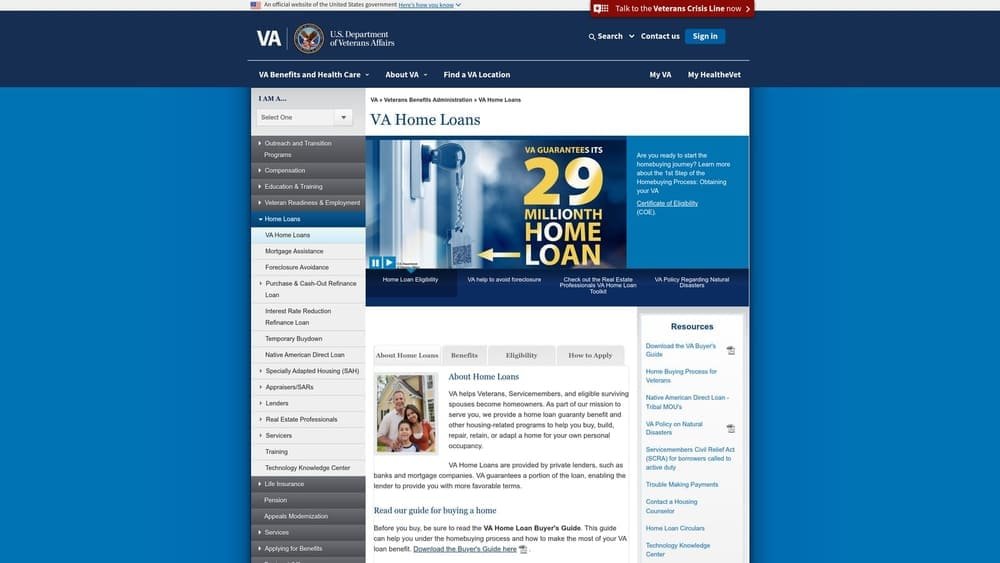
The VA’s condo approval list is a completely independent database from both Fannie Mae and FHA — and it’s the resource every veteran condo buyer in Richmond needs to check separately, because approval on one list does not guarantee approval on another.
Where This Tool Shines
Veterans often assume that if a building is FHA-approved, their VA loan will work there too. That’s not always the case. The VA maintains its own project approval criteria and its own list, and a project can hold FHA approval while being entirely absent from the VA’s database. For veterans buying in Church Hill, The Fan, or anywhere in Henrico, this is a non-negotiable first check.
The VA also allows individual condo unit approval requests through lenders for projects not currently on the approved list — a pathway that requires broker expertise to navigate. Through RichmondMortgages.com, VA loans are available down to 500 FICO on VA-approved projects, which is a meaningful access point for veterans whose credit was affected by service-related financial disruptions.
Key Features
VA-Specific Approval Database: Completely distinct from FHA and Fannie Mae lists — all three must be checked independently based on your loan type.
Individual Unit Approval Option: Lenders can request VA approval for individual units in non-listed projects, opening doors that appear closed on first lookup.
VA Loans to 500 FICO: Available through RichmondMortgages.com for approved projects — a rare access point for veteran buyers with credit challenges.
No Down Payment Requirement: VA-approved condo purchases retain the VA loan’s zero-down benefit, making project approval status especially high-stakes for veteran buyers.
Best For
Veterans and active-duty service members purchasing condos anywhere in the Richmond MSA, particularly those using VA benefits for the first time and unfamiliar with the separate condo approval layer.
Pricing
Free government resource maintained by the U.S. Department of Veterans Affairs.
5. CFPB Owning a Home Toolkit (ConsumerFinance.gov)
Best for: Buyers who want to understand condo-specific mortgage disclosures, HOA document reviews, and what to look for on their Loan Estimate.
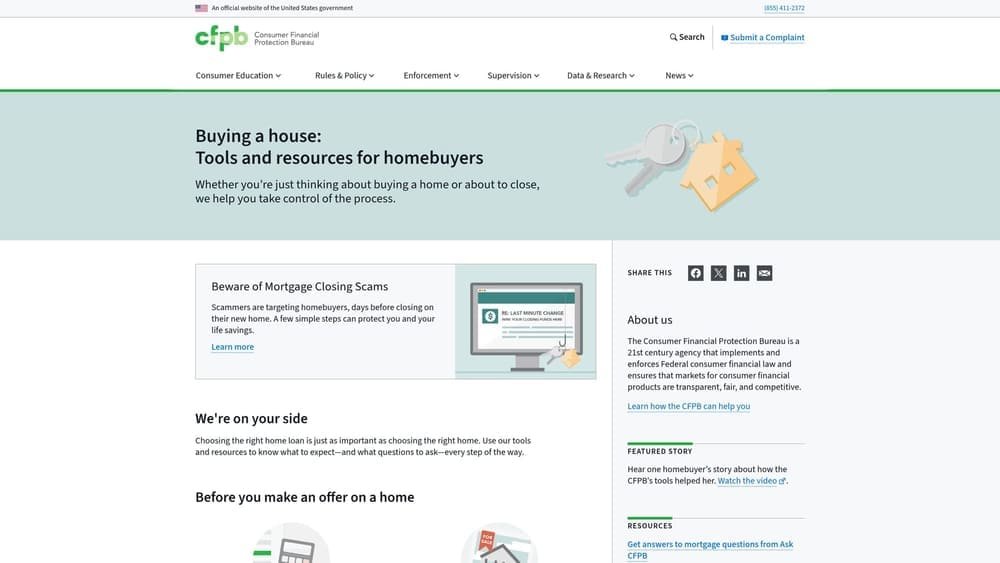
The CFPB’s Owning a Home resource is a plain-language federal toolkit that helps buyers decode the paperwork side of condo mortgage approval — the disclosures, the HOA documents, and the line items on your Loan Estimate that are unique to condo purchases.
Where This Tool Shines
Most buyers focus on their interest rate and monthly payment, but condo purchases come with an additional layer of documents: the condo rider, HOA financial statements, meeting minutes, reserve studies, and special assessment disclosures. The CFPB toolkit explains what each of these documents means and what red flags to look for before you’re too far into a transaction to walk away cleanly.
It’s also genuinely unbiased. This isn’t a tool trying to sell you anything — it’s a federal consumer protection resource designed to help buyers ask better questions of their broker and their real estate agent. Think of it as the study guide you read before the meetings, not during them.
Key Features
Condo Rider and HOA Disclosure Explainers: Plain-language breakdowns of the documents unique to condo purchases that standard home-buying guides skip over.
HOA Document Review Checklists: Guidance on reviewing meeting minutes, reserve studies, and special assessment history — the same documents your lender’s underwriter will scrutinize.
Loan Estimate and Closing Disclosure Guides: Helps buyers identify condo-specific line items and understand how HOA fees are treated in debt-to-income calculations.
No Sales Agenda: A federal resource with no financial interest in your transaction — pure consumer education.
Best For
First-time condo buyers who feel overwhelmed by the document stack, buyers who want to be better prepared for HOA review conversations with their broker, and anyone who has been surprised by a special assessment disclosure late in a transaction.
Pricing
Free government resource, fully accessible at ConsumerFinance.gov with no registration required.
6. Virginia REALTORS® Market Data Portal
Best for: Verifying owner-occupancy trends and condo market conditions in specific Richmond-area neighborhoods before making an offer.
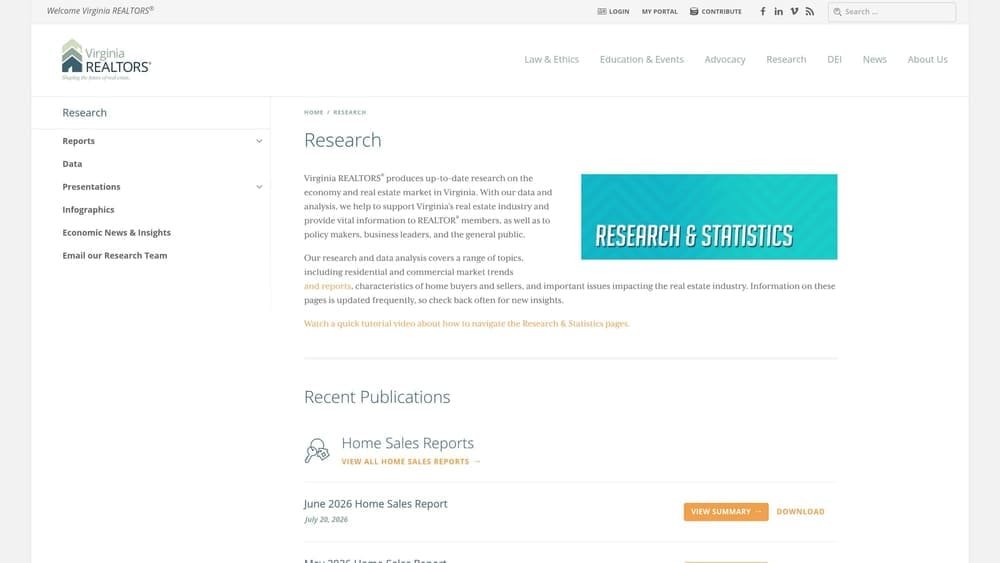
Virginia REALTORS®’ research portal publishes Richmond-area market statistics including condo segment data — and for buyers and brokers assessing project eligibility, owner-occupancy trend data is directly relevant to whether a building will pass lender underwriting.
Where This Tool Shines
Owner-occupancy ratio is one of the most commonly misunderstood condo project approval criteria. Fannie Mae generally requires 50% or more of units to be owner-occupied for established projects. In neighborhoods with high investor concentration — which can shift over time in places like The Fan or Church Hill — a building’s owner-occupancy ratio can drift below that threshold without the HOA even realizing it. Virginia REALTORS® data helps buyers and their brokers spot neighborhoods where this risk is elevated before committing to a specific building.
The portal also covers absorption rates and median prices by neighborhood across Henrico, Chesterfield, and Richmond City condo segments — useful context for understanding whether you’re buying in a stable market or one with rising investor concentration that could affect future financing options.
Key Features
Neighborhood-Level Condo Data: Richmond City, Henrico, and Chesterfield condo segment statistics including median prices and absorption rates.
Owner-Occupancy Trend Relevance: Market data useful for assessing investor concentration in specific neighborhoods — a proxy indicator for project eligibility risk.
Quarterly and Annual Reports: Regular publication schedule means data stays current enough to be actionable during an active home search.
Free Public Access: Core market reports are publicly available; REALTOR® members get access to deeper data sets.
Best For
Buyers and their real estate agents doing neighborhood-level due diligence before targeting specific buildings, particularly in The Fan and Church Hill where condo stock is older and investor concentration varies significantly by block.
Pricing
Free public reports available at VirginiaRealtors.org; full data access requires REALTOR® membership.
7. VantageScore 4.0 Monitoring via RichmondMortgages.com NoTouch Pull
Best for: Condo buyers who want to know exactly where they stand for conventional, FHA, VA, or Non-QM financing before any lender pulls their credit.
RichmondMortgages.com’s VantageScore 4.0 NoTouch Pull is the actual score model used in the platform’s no hard inquiry mortgage pre approval process — meaning the number you see is the number that matters for your condo financing decision, not a consumer estimate from a credit monitoring app.
Where This Tool Shines
There’s a meaningful difference between the credit score your bank app shows you and the score a mortgage broker actually uses in underwriting. VantageScore 4.0 is the model used in RichmondMortgages.com’s pre-qualification process, and knowing your actual score upfront lets you understand whether you qualify for a warrantable conventional condo loan, need FHA terms, have VA eligibility down to 500 FICO, or are best served by a Non-QM product.
The critical advantage here is that this is a soft pull only — no credit score impact from checking your eligibility. For condo buyers who are also rate-shopping across multiple lenders, protecting your credit from multiple hard inquiries is genuinely important. Multiple hard pulls within a short window can affect your score at exactly the moment you need it to be strongest.
Key Features
VantageScore 4.0 Accuracy: The actual score model used in the pre-qualification process — not a consumer approximation, the real number lenders see.
Warrantable vs. Non-QM Threshold Identification: Helps determine which condo financing path is realistic before you start touring buildings.
Soft Pull Only: No credit score impact — a genuine differentiator for buyers who are still in the early research phase of their condo search.
Simultaneous Project Lookup: Paired with condo project eligibility review so both approval layers are assessed in the same conversation.
Best For
Any Richmond condo buyer who wants to understand their financing options before committing to a specific building, and especially buyers who are concerned about protecting their credit score during an active search in competitive neighborhoods like The Fan or Short Pump.
Pricing
No cost as part of the pre-qualification process at RichmondMortgages.com. Start at 804-212-8663.
8. HOA Financial Health Checklist (CFPB + Freddie Mac Guidelines Synthesized)
Best for: Buyers who want a structured framework for evaluating HOA financial documents before their lender’s underwriter finds a problem.
Freddie Mac’s published condo project eligibility criteria, combined with CFPB consumer guidance, form the basis of a practical checklist that every Richmond condo buyer should run through before going under contract — because the HOA financial documents your lender will require are the same ones that most commonly kill deals in underwriting.
Where This Tool Shines
Think of this checklist as the pre-flight inspection you do before your lender’s underwriter does theirs. The Fan District’s older buildings, in particular, can have HOA financials that look fine on the surface but reveal reserve fund shortfalls or pending special assessments when you dig into the actual documents. Catching these issues before you’re under contract — rather than during the loan approval process — gives you negotiating leverage and saves you from losing an earnest money deposit.
The criteria here are drawn from publicly available sources, not invented standards. Freddie Mac publishes its condo project eligibility requirements, and the CFPB’s Owning a Home toolkit provides consumer-facing guidance on the same document categories. Together, they give you a lender’s-eye view of what’s being evaluated.
Key Features
Reserve Fund Adequacy: Lenders typically want HOA reserves funded to at least 10% of the annual HOA budget per Freddie Mac guidance — check this number in the HOA financial statements before your offer.
HOA Delinquency Rate Review: Fannie Mae generally caps unit delinquency at 15% for project approval — a building where many owners are behind on dues is a red flag for agency financing.
Litigation Status Check: Active HOA lawsuits involving the building can disqualify a project from agency financing entirely, regardless of other financial health indicators.
Special Assessment History: Recent or pending special assessments signal financial stress that lenders flag — ask for a 24-month history before going under contract.
Commercial Space Ratio: Projects with more than approximately 35% commercial use face additional restrictions under agency guidelines — relevant for mixed-use buildings in areas like Shockoe Bottom or Scott’s Addition.
Best For
Buyers targeting older or mixed-use buildings in Richmond City, investors evaluating condo purchases in buildings with complex ownership structures, and anyone who has had a condo deal fall apart in underwriting and wants to understand why.
Pricing
Free — built entirely from publicly available Freddie Mac and CFPB guidelines. No tool to purchase or subscribe to; this is a framework you apply to documents you request directly from the HOA.
Worked Dollar Example: Why Project Approval Status Changes Your Payment
Here’s a concrete illustration of why condo project approval status matters financially, not just procedurally. Let’s use an illustrative Fan District condo priced at $285,000.
Warrantable scenario (Fannie Mae-approved project): With 5% down ($14,250), a conventional loan is available at standard market rates. PMI applies until you reach 20% equity, but the rate and program are competitive. Your approximate monthly principal, interest, and PMI payment reflects conventional pricing.
Non-warrantable scenario (project fails agency criteria): Most Non-QM lenders require 20-25% down on non-warrantable condos — that’s $57,000 to $71,250 on the same $285,000 unit. The rate is typically higher than conventional, reflecting the additional lender risk. The down payment difference alone — roughly $43,000 to $57,000 more out of pocket — illustrates why checking project approval status before falling in love with a unit is a financial decision, not just a paperwork detail.
These figures are illustrative only. Actual rates, down payment requirements, and program availability depend on your credit profile, the specific lender, and current market conditions. Contact RichmondMortgages.com for a scenario specific to your situation.
Frequently Asked Questions: Condo Mortgage Approval Requirements
Q1: What makes a condo non-warrantable?
A condo project is non-warrantable when it fails one or more of Fannie Mae’s or Freddie Mac’s project eligibility criteria. Common reasons include owner-occupancy below 50%, a single entity owning more than 20% of units in projects with 21 or more units, HOA delinquency rates above 15%, active litigation involving the HOA, reserve funds below 10% of the annual budget, or commercial space exceeding roughly 35% of the project.
Q2: Can I use FHA financing on any Richmond condo?
No. FHA financing requires the condo project to be on HUD’s approved list, or for the individual unit to qualify under FHA Spot Approval rules per HUD Mortgagee Letter 2019-19. Check the HUD FHA Condo Approval Search before making an offer on any Richmond condo if you plan to use FHA financing.
Q3: What is FHA spot approval and how does it work?
FHA Spot Approval, introduced by HUD Mortgagee Letter 2019-19, allows a buyer to obtain FHA financing on an individual unit in a condo project that is not FHA-approved as a whole, provided the project meets certain conditions. The lender — not the buyer — submits the spot approval request. Your broker can assess whether your target unit qualifies before you make an offer.
Q4: How does owner-occupancy ratio affect my condo mortgage?
Fannie Mae generally requires 50% or more of units in an established project to be owner-occupied for conventional financing. If a building has drifted below that threshold due to investor purchases, it may no longer qualify for conventional loans — pushing buyers toward Non-QM options with higher rates and larger down payment requirements. This is why Virginia REALTORS® neighborhood data is a useful early screening tool.
Q5: Will shopping for a condo mortgage hurt my credit score?
It depends on how you shop. Hard inquiry mortgage applications can affect your score, especially if you apply with multiple lenders independently. RichmondMortgages.com’s NoTouch Credit Pull uses VantageScore 4.0 as a soft pull — no credit score impact from checking your eligibility. This is a meaningful advantage for buyers who are still in the early stages of their condo search and want to protect their score.
Q6: What HOA documents does my lender need for condo approval?
Lenders typically require the HOA’s current budget, reserve fund study, most recent financial statements, meeting minutes from the past 12-24 months, master insurance certificate, and a completed condo questionnaire from the HOA. Special assessment disclosures and litigation status are also standard requests. The CFPB’s Owning a Home toolkit provides a buyer-friendly guide to what each document covers.
Q7: Can veterans use VA loans to buy condos in Richmond?
Yes, but only in VA-approved condo projects. The VA maintains its own approval list at benefits.va.gov/homeloans, which is completely separate from FHA and Fannie Mae databases. A project can be FHA-approved but not VA-approved. Through RichmondMortgages.com, VA loans are available down to 500 FICO on approved projects, and individual unit approval requests can be submitted for projects not currently on the VA list.
Q8: What happens if the condo I want isn’t on any approved list?
You still have options, but they typically require a Non-QM or portfolio loan rather than conventional, FHA, or VA financing. Non-QM condo loans generally require a larger down payment — often 20-25% — and carry higher rates than agency loans. Working with a broker who has access to Non-QM lenders, rather than a single retail bank, is critical in this scenario. RichmondMortgages.com has access to Non-QM products for non-warrantable condos that most traditional lenders cannot offer.
Which Tool Should You Start With?
Condo mortgage approval has two moving parts most buyers don’t expect: your personal financial profile and the condo project itself. The tools in this list address both sides, but the sequence matters.
Start with the Fannie Mae CPM or the FHA/VA lookup databases to confirm project eligibility before you fall in love with a specific unit. A non-approved project can derail even a perfect borrower, and discovering that at the closing table is an expensive lesson. For Church Hill and The Fan, where older building stock means variable approval status, this step is non-negotiable.
Then use RichmondMortgages.com’s NoTouch Credit platform to get a soft pull mortgage pre-qualification that shows sellers you’re serious without a hard inquiry touching your credit report. If the project turns out to be non-warrantable, Duane’s access to hundreds of lenders — including Non-QM options that single-bank retail lenders simply can’t offer — means you still have a path forward. For veterans, VA loans down to 500 FICO through this platform represent an access point that most Richmond mortgage options don’t match.
Richmond’s condo market moves fast, especially in The Fan and Church Hill. Having these tools bookmarked before you start touring puts you a full step ahead of buyers who discover project-approval issues at the closing table. Get your personalized rate comparison today with no credit impact and discover why hundreds of local families choose Duane Buziak for stress-free mortgage solutions backed by 24/7 support and the fastest close times in the area.