
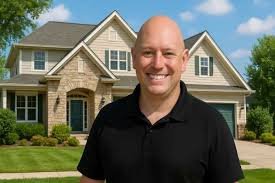
Buying your first home in Richmond is one of the most meaningful financial decisions you’ll ever make — whether you’re drawn to a craftsman bungalow in Church Hill, a rowhouse in The Fan, or a newer build in Chesterfield or Midlothian. The good news: you don’t need a 20% down payment or a perfect credit score to get started. A range of first time home buyer mortgage programs exist specifically to lower the barrier to entry, and many of them stack together in ways that can dramatically reduce what you bring to the closing table.
The challenge most buyers face isn’t a lack of programs. It’s not knowing which ones apply to their situation, their neighborhood, and their credit profile. A conventional loan works differently than an FHA loan. A VA loan has rules that USDA loans don’t. Down payment assistance programs in Henrico County operate separately from those offered statewide through Virginia Housing (VHDA). And some programs that look great on paper quietly disqualify you based on income limits, property type, or purchase price.
This guide walks through seven of the most effective programs and strategies available to first-time buyers in the Richmond metro — with real numbers, neighborhood-specific context, and honest comparisons. I’m Duane Buziak, NMLS #1110647, mortgage broker with Coast2Coast Mortgage LLC (NMLS #376205). My team works with buyers across Church Hill, The Fan, Henrico, Chesterfield, and Midlothian every week. We use a soft credit pull mortgage approach — no hard inquiry mortgage pre-approval required — so you can explore every program below without any credit impact before you’re ready to commit.
1. FHA Loans — The Most Forgiving Entry Point for Richmond Buyers
The Challenge It Solves
Most first-time buyers in neighborhoods like Church Hill and The Fan come in with solid income but limited savings and credit scores that aren’t quite at the conventional threshold. FHA loans are specifically designed for this profile. They accept lower credit scores, require less cash upfront, and are widely available through broker channels that can shop rates across hundreds of lenders rather than locking you into one institution’s pricing.
The Strategy Explained
FHA-backed mortgages, insured by the U.S. Department of Housing and Urban Development, allow a 3.5% down payment with a 580+ FICO score. If your score falls between 500 and 579, you can still qualify — but the required down payment rises to 10%. HUD’s Section 203(b) program guidelines govern these rules, and they apply uniformly across the Richmond MSA including Chesterfield, Henrico, and Richmond City.
There are two mortgage insurance premium (MIP) components to understand. An upfront MIP of 1.75% is added to your loan balance at closing. An annual MIP — which varies by loan term and LTV — is divided into monthly payments. For most 30-year FHA loans with less than 10% down, that annual MIP rate currently sits at 0.55% of the loan balance, per HUD’s published schedule. Unlike conventional PMI, FHA MIP typically persists for the life of the loan when you put less than 10% down.
Implementation Steps
1. Check your FICO score — or let us run a soft credit pull mortgage pre-qualification to see where you stand without any credit impact.
2. Confirm the current FHA loan limit for the Richmond MSA at HUD’s mortgage limits page. As of 2026, the conforming floor is a useful reference point, but FHA limits are set separately by county and updated annually.
3. Calculate your required down payment and upfront MIP so you know your true cash-to-close number before you start making offers.
Worked Dollar Example: $285,000 Church Hill Home
Let’s put real numbers on this for a home priced at the lower end of the Church Hill market, where Virginia REALTORS market data shows median prices have historically ranged from the mid-$250,000s into the low $300,000s.
Home Price: $285,000
FHA Down Payment (3.5%): $9,975
Base Loan Amount: $275,025
Upfront MIP (1.75%, financed): $4,813 added to loan
Estimated Monthly MIP (0.55% annual): approximately $126/month
Principal and Interest: Based on today’s rate — check current rates at richmondmortgages.com rather than relying on a number that changes daily.
Compare that to a Conventional 97 loan on the same property: 3% down means $8,550 out of pocket (saving you $1,425 upfront), no upfront MIP, and PMI that cancels automatically once your loan-to-value reaches 80%. The catch: you typically need a 680+ FICO to make conventional pricing competitive. We’ll cover that comparison in detail in Strategy 6.
Pro Tips
FHA loans are assumable — meaning a future buyer can take over your rate when you sell, which can be a meaningful selling advantage in a higher-rate environment. Also, seller concessions up to 6% of the purchase price are allowed on FHA loans, giving your agent more negotiating room on closing costs than conventional programs typically permit.
2. VA Loans — The Strongest Program Available if You’ve Served
The Challenge It Solves
Veterans and active-duty service members buying in Henrico, Chesterfield, or anywhere in the Richmond metro often don’t realize the full strength of the benefit they’ve earned. VA loans aren’t just competitive — they’re structurally superior to almost every other first-time buyer program for those who qualify. The obstacle is usually awareness, not eligibility.
The Strategy Explained
VA home loans, guaranteed by the U.S. Department of Veterans Affairs, offer no down payment requirement, no private mortgage insurance, and competitive rates for eligible veterans, active-duty service members, and surviving spouses. There is a VA funding fee — a one-time charge that varies based on your down payment and whether it’s your first VA loan use — but it’s waived entirely for veterans with a qualifying service-connected disability. Current fee schedules are published at va.gov.
Here’s a meaningful differentiator worth knowing: Richmond Mortgages approves VA loans down to 500 FICO. That’s not a marketing claim — it reflects access to the wholesale broker channel, where investor overlays are more flexible than what retail banks and direct lenders typically offer. CapCenter, for example, does not publicly advertise VA lending to 500 FICO, nor do they offer Non-QM, DSCR, or Bank Statement programs. If your credit history has some rough patches from deployment, medical bills, or a difficult period, the broker channel is where your options stay open.
Implementation Steps
1. Obtain your Certificate of Eligibility (COE) — you can request it through va.gov or let us pull it on your behalf as part of your pre-qualification.
2. Run a no hard inquiry mortgage pre-approval through our office so we can identify which VA investors offer the most favorable terms for your specific credit profile.
3. Confirm whether your funding fee is waived due to a service-connected disability rating before signing any loan documents.
Pro Tips
VA loans have no loan limit for borrowers with full entitlement — meaning if you’re buying in a higher-priced pocket of Henrico or near Short Pump, you’re not capped at conforming limits. VA loans are also assumable, which carries the same future resale advantage described in the FHA section above. If you’ve served, this is the program to exhaust before considering anything else.
3. USDA Loans — The Zero-Down Option Hiding in Chesterfield and Henrico’s Outer Pockets
The Challenge It Solves
Many buyers targeting newer construction or more space in outer Chesterfield or the rural fringes of Henrico County assume they need a down payment. USDA Rural Development loans eliminate that assumption — but only if the property falls within an eligible geographic zone. The surprise is how many Richmond-area ZIP codes still qualify, even in areas that feel suburban rather than rural.
The Strategy Explained
The USDA Single Family Housing Guaranteed Loan Program offers zero down payment financing for eligible properties in qualifying areas. Eligibility is determined by two factors: the property location (verified using the USDA eligibility map) and household income relative to the county’s income limits. Both must be satisfied — and income limits vary by household size, so a family of four has a higher ceiling than a single borrower.
On the cost side, USDA loans carry an upfront guarantee fee of 1% of the loan amount and an annual fee of 0.35% of the outstanding balance. Compare that directly to FHA: the FHA upfront MIP is 1.75% (nearly double) and the annual MIP is 0.55% (also higher). For buyers who qualify on both programs, USDA is often the more cost-effective choice — with zero down on top of it.
Implementation Steps
1. Run the specific property address through the USDA eligibility map before falling in love with a listing. Eligibility boundaries can shift, and assumptions are often wrong in both directions.
2. Verify your household income against current USDA income limits for Chesterfield and Henrico counties at rd.usda.gov. Remember to count all household members’ income, not just the borrowers on the loan.
3. Request a soft pull mortgage broker pre-qualification that compares your USDA and FHA options side by side so you can see the monthly payment difference before committing to a program.
Pro Tips
USDA loans require the home to be a primary residence, so investment properties and vacation homes are excluded. The program also has a debt-to-income ratio requirement that can be more restrictive than FHA in some scenarios. That said, for a buyer targeting a $320,000 home in outer Chesterfield with qualifying income and location, the combination of zero down and lower ongoing fees can represent meaningful long-term savings compared to every other program on this list.
4. VHDA Loan Programs — Virginia’s State-Backed First-Time Buyer Advantage
The Challenge It Solves
Even with a low-down-payment loan program, the remaining 3-3.5% of a Richmond-area home price can feel like a significant hurdle — especially when you’re also covering moving costs, inspections, and reserves. Virginia Housing’s programs address this directly by bundling down payment assistance into the first mortgage structure, creating a single application process rather than a patchwork of separate programs.
The Strategy Explained
Virginia Housing (formerly VHDA) offers FHA Plus and Conventional Plus programs through its homebuyer programs portal. Both bundle a built-in down payment assistance component — structured as a second mortgage — with a first mortgage. The DPA covers the minimum required down payment, which means qualified buyers can potentially close with minimal cash out of pocket beyond closing costs.
Income and purchase price limits apply and are specific to the Richmond MSA. Buyers in Midlothian and Henrico often find they fall within the qualifying income bands, particularly at earlier career stages. The standard first-time buyer definition applies: no ownership interest in a primary residence during the past three years. This is worth noting for buyers who owned a home previously but have been renting — you may qualify again.
Implementation Steps
1. Review current income and purchase price limits for the Richmond MSA at virginiahousing.com — these are updated periodically and the numbers that appear in blog posts from even a year ago may be outdated.
2. Determine whether FHA Plus or Conventional Plus better fits your credit profile. Conventional Plus typically requires a higher FICO score but avoids FHA’s lifetime MIP structure.
3. Ask about stacking additional DPA on top of VHDA — in some scenarios, broker-channel assistance programs can layer with VHDA to further reduce closing costs.
Pro Tips
VHDA also offers a free homebuyer education course, which is required for most of their programs and can be completed online. Beyond the requirement, the course is genuinely useful — it covers budgeting, the purchase process, and what to expect at closing. HUD-approved housing counseling agencies in Richmond can supplement this; find local options at hud.gov/find-a-housing-counselor.
5. Down Payment Assistance Programs — Dynamo, Turbo DPA, and Local Grants
The Challenge It Solves
VHDA’s built-in DPA is excellent for buyers who fall within its income limits — but what about buyers who earn slightly too much, or who need more assistance than the state program provides? Broker-channel DPA programs fill this gap, and they’re not available through retail banks or direct lenders. This is one of the most concrete advantages of working with a broker rather than walking into a bank branch.
The Strategy Explained
Through the Coast2Coast broker network, programs like Dynamo DPA and Turbo DPA provide down payment and closing cost assistance with structures that differ meaningfully from state programs. Some versions carry no income limit restrictions — a significant advantage for buyers who earn above VHDA thresholds but still need help with the upfront cash requirement. Terms, availability, and assistance amounts change periodically, so the best source for current specifics is a direct conversation with our office at 804-212-8663.
Beyond broker-channel programs, local resources exist at the county and city level. Henrico County periodically offers homebuyer assistance — check current availability at henrico.us. Chesterfield County programs can be reviewed at chesterfield.gov. Richmond City resources are listed at rva.gov. These programs cycle based on funding availability, so timing matters.
Implementation Steps
1. Identify your income relative to VHDA limits first — if you’re under the cap, start there. If you’re over, broker-channel DPA programs become your primary option.
2. Check county-level programs for the specific jurisdiction where you’re buying. Henrico, Chesterfield, and Richmond City each have separate programs with separate application processes.
3. Work with a broker who can layer DPA on top of your first mortgage — the stacking of an FHA loan plus a DPA second mortgage plus a local grant, where eligible, can reduce your cash-to-close to a fraction of what any single program achieves alone.
Pro Tips
Some DPA programs are forgivable over time — meaning if you stay in the home for a required period, the second mortgage balance is gradually reduced to zero. Others are repayable at sale or refinance. Understanding which structure you’re accepting matters for your long-term financial planning. Always ask whether the DPA is forgivable, repayable, or a grant before signing.
6. Conventional 97 and HomeReady — When Your Credit Score Opens Better Doors
The Challenge It Solves
FHA loans are accessible, but they carry costs that compound over time — particularly the lifetime MIP requirement for buyers who put less than 10% down. Buyers with stronger credit profiles often pay more than necessary by defaulting to FHA when a conventional program would serve them better. The right program depends on your specific score, income, and how long you plan to stay in the home.
The Strategy Explained
Fannie Mae’s HomeReady program allows 3% down with income limits set at 80% of the Area Median Income for the property’s location — details at fanniemae.com/homeready. Freddie Mac’s Home Possible program operates on a similar structure. Both require private mortgage insurance (PMI) at low down payment levels, but unlike FHA MIP, conventional PMI cancels automatically once your loan-to-value ratio reaches 80% — either through appreciation, paydown, or a combination of both.
For buyers with 680+ FICO scores targeting homes in Midlothian or Chesterfield — where the Virginia REALTORS market data shows a broad price range from the low $300,000s into the mid-$400,000s — the long-term cost difference between FHA and conventional can be substantial. The 2026 conforming loan limit for the Richmond MSA is $832,750 (verify the current figure at fhfa.gov), meaning most Richmond-area purchases fall well within conventional loan parameters.
Program Comparison Table
The table below compares the major first-time buyer programs side by side on the factors that matter most at the closing table and over the life of the loan.
Program: FHA Loan | Min. Down: 3.5% (580+ FICO) | Min. FICO: 500 (10% down) / 580 (3.5% down) | Mortgage Insurance: Upfront 1.75% + 0.55% annual (lifetime if <10% down) | Income Limits: None | Property Limits: Must meet FHA standards | Available Through Broker: Yes
Program: VA Loan | Min. Down: 0% | Min. FICO: 500 (through Richmond Mortgages) | Mortgage Insurance: None (funding fee applies; waived for disabled vets) | Income Limits: None | Property Limits: Primary residence | Available Through Broker: Yes
Program: USDA Loan | Min. Down: 0% | Min. FICO: Typically 640+ | Mortgage Insurance: 1% upfront + 0.35% annual | Income Limits: Yes (by county and household size) | Property Limits: Eligible rural/suburban zones only | Available Through Broker: Yes
Program: VHDA FHA Plus | Min. Down: 0% out of pocket (DPA covers minimum) | Min. FICO: 620+ typical | Mortgage Insurance: FHA MIP applies | Income Limits: Yes (Richmond MSA limits) | Property Limits: Purchase price limits apply | Available Through Broker: Yes
Program: VHDA Conventional Plus | Min. Down: 0% out of pocket (DPA covers minimum) | Min. FICO: 640+ typical | Mortgage Insurance: PMI (cancels at 80% LTV) | Income Limits: Yes (Richmond MSA limits) | Property Limits: Purchase price limits apply | Available Through Broker: Yes
Program: Conventional 97 / HomeReady | Min. Down: 3% | Min. FICO: 620+ (680+ for best pricing) | Mortgage Insurance: PMI (cancels at 80% LTV) | Income Limits: Yes for HomeReady (80% AMI) | Property Limits: Conforming loan limits apply | Available Through Broker: Yes
Program: Dynamo / Turbo DPA (stacked) | Min. Down: Varies (DPA covers down payment) | Min. FICO: Program-dependent | Mortgage Insurance: Depends on first mortgage type | Income Limits: Some versions have none | Property Limits: Depends on first mortgage | Available Through Broker: Broker-channel only
Implementation Steps
1. Pull your credit profile — even a soft pull mortgage broker pre-qualification gives us enough to determine whether FHA or conventional pricing works in your favor.
2. Run a side-by-side payment comparison factoring in the total monthly cost including MIP or PMI, not just the principal and interest payment.
3. Model the break-even point: how many months until the FHA MIP cost exceeds what you would have paid in conventional PMI? If you plan to stay in the home longer than that break-even, conventional often wins.
Pro Tips
HomeReady and Home Possible also allow income from a non-borrowing household member to be considered in certain circumstances — a useful feature for multigenerational households that are increasingly common across Chesterfield and Henrico. Ask specifically about boarder income and accessory dwelling unit rental income as qualifying sources.
7. The NoTouch Credit Pull Strategy — How to Shop All Programs Without Hurting Your Score
The Challenge It Solves
Here’s the situation I see regularly: a first-time buyer spends weeks researching programs, gets excited about a home in Midlothian or Church Hill, and then hesitates to take the next step because they’re afraid that applying will damage their credit score. That fear is understandable — but it’s also costing buyers time and, in competitive markets, homes. The solution is knowing exactly what triggers a hard inquiry and what doesn’t.
The Strategy Explained
Richmond Mortgages uses a soft credit pull mortgage pre-qualification process powered by Vantage Score 4.0 — a tri-merge credit model that allows us to review your full credit profile without generating a hard inquiry on your report. This means you can explore all seven programs covered in this guide, see which ones you qualify for, and get a realistic picture of your purchasing power — all with no credit hit mortgage application required.
The CFPB explains the distinction clearly: a soft inquiry does not affect your credit score and is not visible to other lenders. A hard inquiry occurs when a lender pulls your credit for a formal application decision. The conversion from soft to hard happens only when you’re ready to commit to a full application — and even then, multiple mortgage inquiries within a concentrated window are typically treated as a single inquiry for scoring purposes.
Implementation Steps
1. Start with a no hard inquiry mortgage pre-approval through our office — we review your Vantage Score 4.0 profile, identify your strongest program options, and give you a realistic purchase price range before you ever set foot in a house.
2. Use that pre-qualification to shop neighborhoods and programs with confidence. If your situation changes — a new job, a paid-off debt, a gift from family — we can re-run the soft pull to see how your options shift.
3. Convert to a full application only after you’ve identified your target property and confirmed your program. At that point, the hard inquiry is a necessary step, and you’ll make it knowing exactly what you’re getting into.
Pro Tips
Avoid opening new credit cards, financing a car, or making any large purchases between your pre-qualification and your closing date. Even a soft-pull pre-qualification can be affected by changes to your credit profile that occur after we run it. The cleanest path to closing is keeping your financial picture stable from pre-qual through funding.
Your Implementation Roadmap — Putting All Seven Programs Together
The most effective approach to first time home buyer mortgage programs isn’t picking one and hoping for the best. It’s running a structured eligibility check that starts with your strongest options and layers in assistance from there.
Start here — VA if you’ve served: If you’re a veteran, active-duty service member, or surviving spouse, VA is your first call. Zero down, no PMI, and access to VA lending down to 500 FICO through our broker channel makes this the most powerful program on the list for those who qualify.
USDA next — if you’re targeting outer Chesterfield or Henrico: Before assuming you need a down payment, run the property address through the USDA eligibility map. Zero-down with lower ongoing fees than FHA is worth a five-minute check.
FHA or Conventional for Church Hill, The Fan, and urban Henrico: If VA and USDA don’t apply, your credit score determines the path. Below 680, FHA is typically the better entry point. At 680 and above, run the conventional comparison — the long-term MIP savings often justify the slightly higher upfront bar.
Layer in DPA regardless of which first mortgage you choose: VHDA’s built-in assistance, broker-channel Dynamo and Turbo DPA programs, and county-level grants can stack on top of your first mortgage. The goal is to reduce your cash-to-close to the minimum viable number while keeping your monthly payment manageable.
Start everything with a soft pull: None of this costs you anything to explore. Our no-touch credit approach means you can map your full option set before making any commitment.
Call Duane at 804-212-8663 to start the conversation, or get your personalized rate comparison today with no credit impact. We’re available 24/7 and consistently deliver some of the fastest close times in the Richmond market.
Frequently Asked Questions
What is the minimum credit score to buy a home in Richmond, VA in 2026?
The minimum credit score depends on the loan program. FHA loans allow scores as low as 500 (with 10% down) or 580 (with 3.5% down) per HUD guidelines. VA loans through Richmond Mortgages are available to 500 FICO. USDA loans typically require 640+. Conventional loans generally start at 620, with best pricing at 680 and above.
Can I get a Richmond mortgage pre-approval without a hard credit pull?
Yes. Richmond Mortgages uses a soft credit pull mortgage pre-qualification powered by Vantage Score 4.0. This allows us to review your full credit profile and identify qualifying programs without generating a hard inquiry or affecting your credit score. You only convert to a full hard-pull application when you’re ready to commit.
How does a Richmond mortgage broker beat CapCenter’s pricing structure?
CapCenter is known for rolling closing costs into the rate — a structure that works for some buyers but isn’t always the most cost-effective path. As a broker, Richmond Mortgages shops hundreds of lenders simultaneously to find competitive rates across multiple investor options. We also offer programs CapCenter does not publicly provide: VA lending to 500 FICO, Non-QM loans, DSCR loans, Bank Statement loans, and broker-channel DPA programs with no income limits.
What is the median home price in Richmond, VA in 2026?
Prices vary significantly by neighborhood. Church Hill has historically ranged from the mid-$250,000s into the low $300,000s. The Fan typically runs higher, from the mid-$300,000s into the $500,000s and above. Chesterfield and Midlothian cover a broad range from the low $300,000s into the $400,000s and beyond for new construction. For current figures, Virginia REALTORS publishes quarterly Richmond MSA market data.
What first-time homebuyer and down payment assistance programs are available in Richmond, VA?
Options include VHDA FHA Plus and Conventional Plus (with built-in DPA), broker-channel programs like Dynamo DPA and Turbo DPA (some with no income limits), Henrico County assistance at henrico.us, Chesterfield County programs at chesterfield.gov, Richmond City programs at rva.gov, and Home For Heroes for qualifying service professionals. Many of these programs can be stacked for maximum impact.
How does the NoTouch Credit Pull work for a Richmond mortgage pre-approval?
Richmond Mortgages pulls your Vantage Score 4.0 — a tri-merge credit model — as a soft inquiry. This gives us a complete view of your credit profile, including scores and tradelines, without triggering a hard inquiry. Your score is unaffected, and the inquiry is invisible to other lenders. We convert to a hard pull only when you authorize a full loan application for a specific property and program.
What is the conforming loan limit in Richmond, VA for 2026?
The 2026 conforming loan limit for the Richmond MSA is $832,750, per FHFA. Verify the current figure at fhfa.gov, as limits are updated annually. Most Richmond-area first-time buyer purchases fall well within this limit, meaning standard conventional and FHA loan programs apply without jumbo loan requirements.
Is a mortgage broker or a retail lender better for buying a home in Richmond, VA?
For most first-time buyers, a broker offers meaningful advantages: access to hundreds of lenders rather than one institution’s product set, availability of broker-channel DPA programs not offered at retail banks, flexibility on credit overlays (including VA to 500 FICO), and the ability to compare programs side by side before committing. Retail lenders can only offer their own products. A broker shops the market on your behalf.
About the Author
Duane Buziak, NMLS #1110647, is a licensed mortgage broker with Coast2Coast Mortgage LLC (NMLS #376205), serving first-time buyers, move-up buyers, and real estate investors across Church Hill, The Fan, Henrico, Chesterfield, Midlothian, and the broader Richmond metro. Recognized as Best Mortgage Broker in Virginia 2025 and a Scotsman Guide Top Originator, Duane and his team specialize in matching buyers to the right program — not the easiest one to close. Reach him directly at 804-212-8663 or at richmondmortgages.com.